

5 Reasons Why Active Gaming Is Great For Families

Finding an activity the whole family genuinely wants to do together can be surprisingly difficult, especially when you’re in a quieter city like Perth or Adelaide.
Younger kids want to run around. Older kids and teenagers want something that is more challenging and doesn’t feel childish. Parents want to keep everyone away from their separate screens but can also be struggling with breaking their own phone addictions.
Active gaming is perfect for families because it aligns everyone’s wishes together in one neat bundle – it uses the lights, sounds, challenges and instant feedback people love about video games and social media, but turns your body into the controller. Instead of sitting down and pressing buttons, players run, climb, throw, react, remember, solve and work together.
Here are 5 ways in which active gaming makes screen time “healthier” for families:
1. Movement Feels Better When It Doesn’t Feel Like Exercise
We all know being active is important. The Australian Government regularly provides guidance around the wide range of benefits for children and young people, including improved fitness, coordination, confidence, concentration, teamwork and healthy development.
The difficult part is not explaining those benefits. It’s finding something kids actually want to do, because not everybody finds sport all that fun.
That is where active gaming works so well. Players become focused on reaching the next light, beating the buzzer or chasing a new high score instead of focusing on how much they are moving.
There are no laps to run and no workout to complete. Movement becomes part of the game—and that makes it much easier for kids and adults to become involved.
2. It Turns Screen Time Into Shared Time
We don’t think there is anything wrong with enjoying video games, movies or time online – despite most people thinking they are “unhealthy” and “lazy” hobbies, there is a lot of evidence out there that “parallel play” is important for young people to connect with adults: everyone sitting in the same room, focused on their own thing.
However, if you’re looking for a more co-operative form of play, active gaming keeps the excitement of technology while making the experience physical and social at the same time.
You can see each other, talk to each other and react to everything happening around you. Someone will come up with a brilliant plan. Someone else will completely ignore it. Parents become unexpectedly competitive, kids take charge and siblings briefly discover the meaning of teamwork.
Even when the strategy falls apart, it usually becomes the part everyone talks about afterwards.
3. Everyone Has Something to Contribute
Traditional sports can be difficult for families with different ages, fitness levels and abilities. The fastest or most experienced player can dominate, while everyone else struggles to keep up.
Active gaming gives families of all shapes and sizes more ways to play.
One challenge might reward speed and reactions. The next might rely on memory, aim, timing, balance or communication. A child might be quickest across the room, while a parent notices the pattern everyone else missed.
This variety gives different family members opportunities to shine. It also means success is not always about being the strongest or most athletic person in the room.
To be honest, often the best player is simply the one who takes 10 seconds to read the instructions.
4. Playing Together Builds Teamwork Naturally
Ask a family to sit down and practice communication, and you probably won’t get much enthusiasm from the kids.
Give them a challenge with flashing targets and a countdown, and suddenly everyone is calling instructions, making decisions and encouraging each other.
Co-operative active games create natural opportunities to practice:
- Communication
- Problem-solving
- Listening
- Leadership
- Patience
- Working towards a shared goal
Because these skills are part of the game, they don’t feel like a lesson. Families develop them while trying to beat the challenge—and while laughing at each other’s questionable strategies.
5. There Is Room for Friendly Competition Too
Not every family wants to work together all the time.
Sometimes the most memorable moments come from discovering that Mum has an unexpectedly accurate throwing arm, Dad takes the leaderboard far too seriously or the youngest player has been quietly carrying the entire team.
A little friendly competition can give everyone something to chase. It creates excitement, encourages players to try again and gives families plenty to talk about after the session.
We think the most important part is having choices. Some families love competing against one another. Others would rather combine their skills and set a score together. Some just walk to walk on lights together and have a chat. Active gaming at Cubetown can offer all of those.
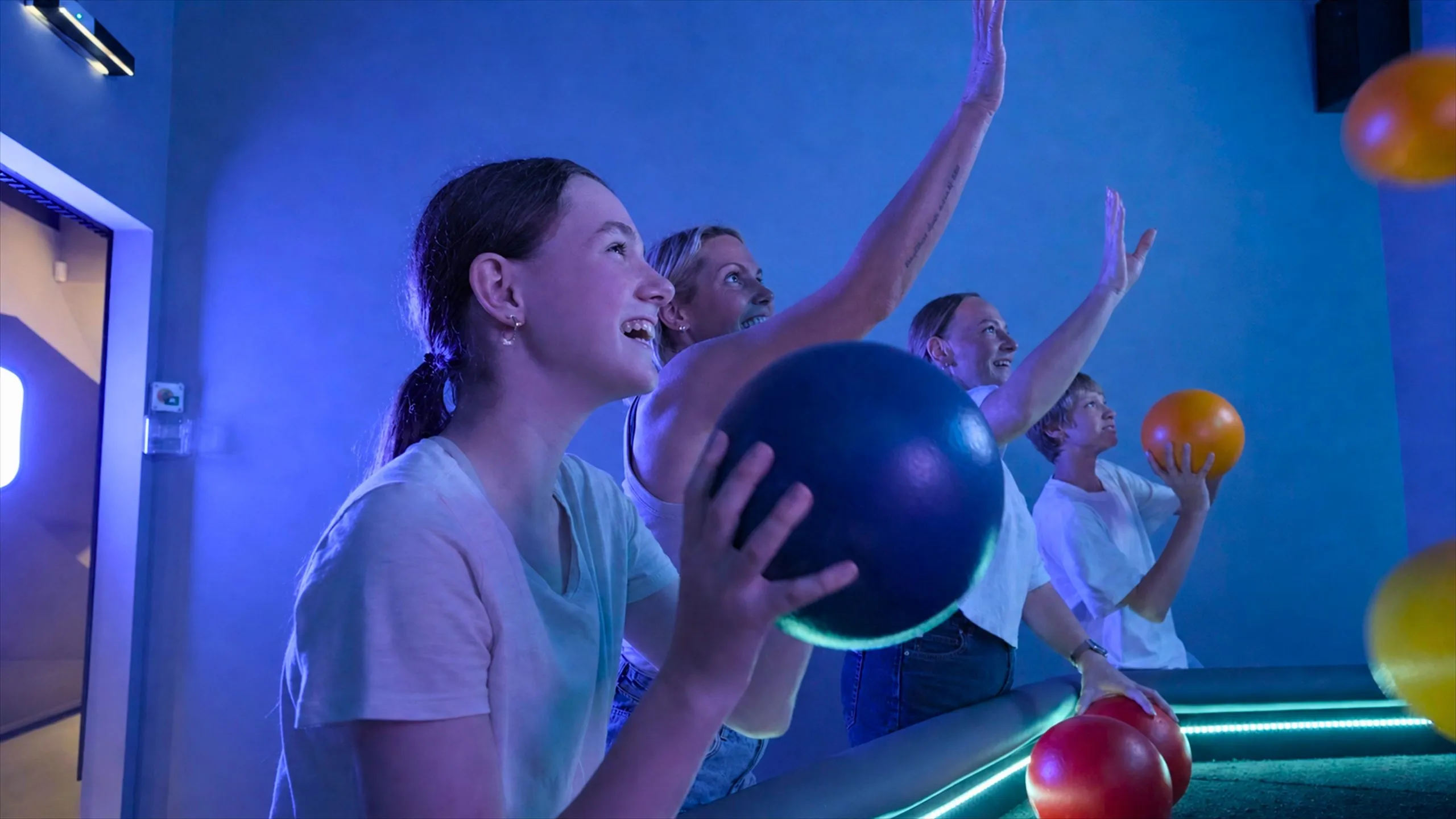
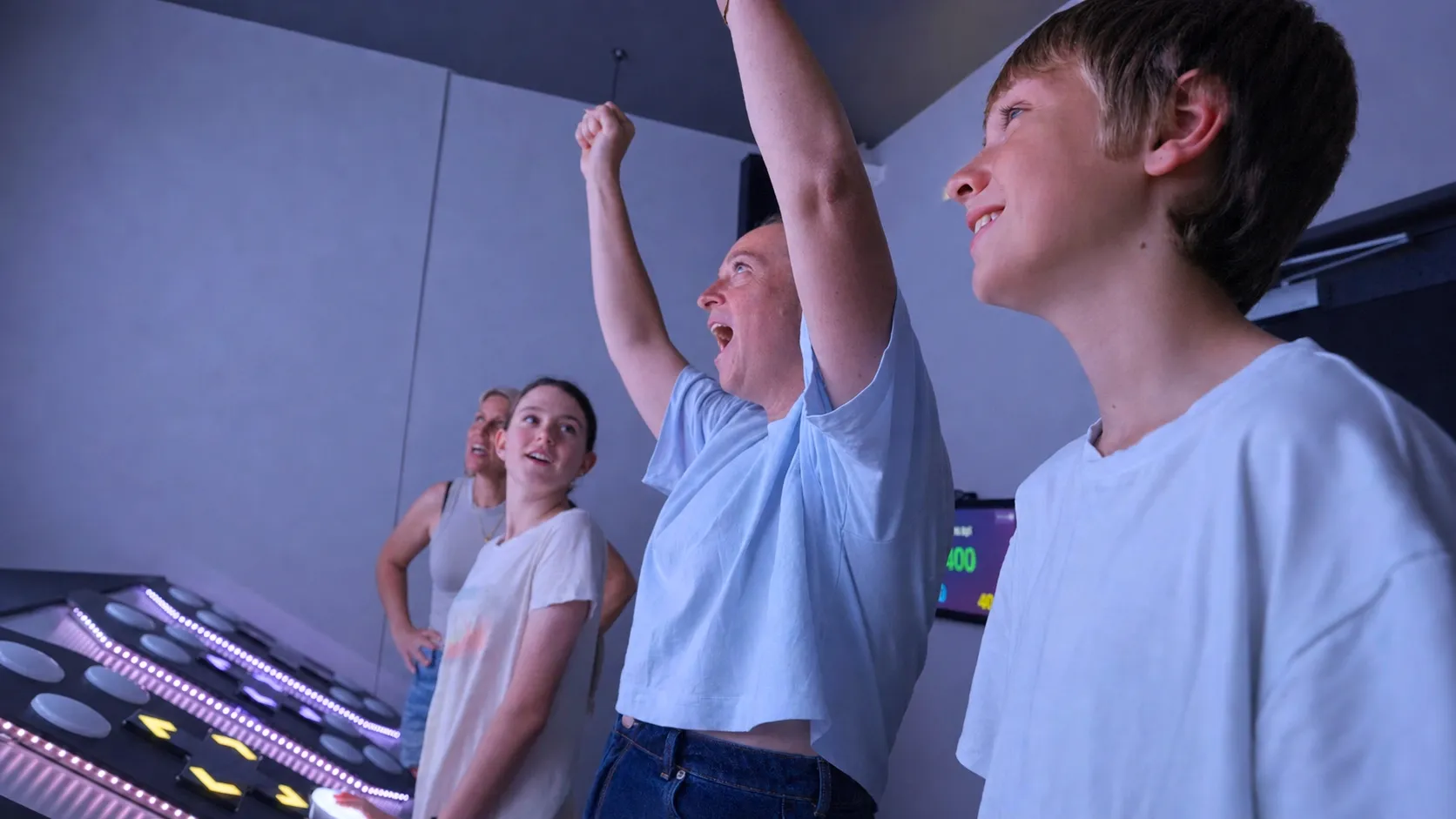
How Cubetown Makes Active Gaming Work for Families
We created Cubetown to make movement feel like play.
Across six active challenge rooms, families step into real-life video game-style experiences filled with interactive floor tiles, climbing walls, basketball hoops, glowing targets, giant controllers, lights and sounds.
With more than 20 games developed in-house, there is no single way to play.
Switch Between Different Game Modes
Families can move between fast physical games, memory challenges, precision games and calmer sensory-friendly experiences.
If one game isn’t right for your group, you don’t have to spend the rest of your session stuck with it. Choose another mode, change the pace or try a completely different challenge.
Choose Your Difficulty
Our games include different difficulty levels, so your family can find a challenge that works for you.
Start gently while everyone learns how the room works, then increase the difficulty when you’re ready. More experienced players can chase harder challenges without making every game inaccessible to beginners.
Play Co-operatively or Competitively
Want to work together? Choose a co-operative game and combine your efforts to set the best score you can.
Want to settle a family rivalry? Choose a competitive game and find out who earns the bragging rights.
You can switch between the two throughout your visit, so the entire session doesn’t have to follow the same format.
Spend Your Session Playing
A Cubetown booking gives you one hour to explore the games at your own pace.
You aren’t locked into one long activity. You can try different rooms, replay a favourite, improve your score or move on whenever your family is ready for something new.
That freedom helps keep everyone engaged—especially families with different interests and attention spans.
Get Involved as a Family
Cubetown isn’t an activity where parents have to sit nearby and watch the kids play.
Children and adults can enter the rooms and take on the challenges together. That might mean helping each other, competing against each other or discovering that the kids understand the game much faster than the adults.
Cubetown is generally recommended for ages six and over. Children aged five and under can play free with a paying adult, provided they have an adult actively helping them through the experience.
An Indoor Family Activity for Any Weather
Finding reliable indoor family activities can be particularly useful during wet weekends, hot afternoons and school holidays.
Cubetown gives families in Perth, Melbourne and Adelaide somewhere to move and play without having to plan around the weather. It can be a weekend activity, a school holiday adventure, a family celebration or simply a different way to spend an hour together.
You might arrive looking for something to keep the kids entertained. You may leave having discovered the most competitive member of your family.
Family Time That Feels Like Play
The best family activities are not necessarily the ones with the most elaborate plans. They are the ones where everyone becomes involved, shares the experience and leaves with something to laugh about afterwards.
Active gaming gives families a way to move, think, compete and connect—without making any of it feel forced.
That is what we want Cubetown to be: a place where movement is disguised as play and the whole family gets to be part of the game.